The Crucial Role of a Secure Fit in Intense Workouts
For anyone pushing their limits in the gym, on the track, or during a high-intensity interval training (HIIT) session, few things are more disruptive than an earbud constantly threatening to fall out. A secure fit isn’t just about comfort; it’s fundamental to maintaining focus, enjoying your motivation-boosting playlist, and ultimately, achieving your fitness goals without interruption. Wireless earbuds designed for intense workouts must go beyond basic audio delivery, incorporating specific physical features to withstand sweat, motion, and gravity.
When earbuds slip, you’re not only distracted, but you’re also likely to lose the optimal sound seal, diminishing bass response and overall audio quality. Constantly readjusting them can break your rhythm and even lead to accidental damage if they fall. Therefore, understanding the engineering behind a truly secure fit is paramount when selecting your next pair of workout companions.

Key Features for Unwavering Stability
1. Advanced Ear Tip Design and Material
The first line of defense against slippage is the ear tip. Standard silicone tips come in various sizes, but for workouts, look for options that prioritize grip and a snug seal. Many sport-focused earbuds offer a wider range of tip sizes, including extra-small and extra-large, to accommodate diverse ear canals. Some models also include memory foam tips, which expand to fill the ear canal more completely, offering superior passive noise isolation and a customized, pressure-free fit that often proves more secure than silicone for many users.
2. Wingtips, Fins, and Stabilizer Arcs
Beyond the ear canal, many high-performance earbuds utilize external stabilizers known as wingtips, fins, or ear hooks. These small, often flexible, protrusions are designed to tuck into the various folds and ridges of your outer ear (the concha), effectively ‘locking’ the earbud into place. They distribute pressure more evenly and create a multi-point contact system, significantly reducing the chance of movement during dynamic activities like jumping, running, or burpees. Look for earbuds that offer multiple sizes of these stabilizers, allowing you to find the perfect anchor for your unique ear shape.
3. Over-Ear Hooks
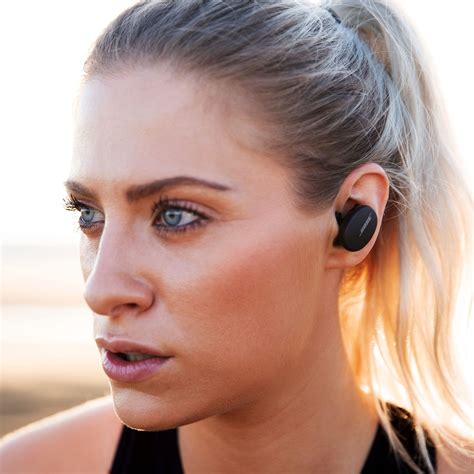
For the most demanding and high-impact sports, over-ear hooks often provide the ultimate in security. These designs feature a flexible hook that wraps around the back of your ear, ensuring the earbud remains attached even during vigorous motion. While they might be slightly more noticeable than discreet in-ear designs, their reliability is unmatched for activities like boxing, climbing, or obstacle course racing where absolute stability is non-negotiable. Many modern over-ear hook designs are adjustable and made from soft, skin-friendly materials for comfort.
4. Lightweight and Balanced Design
The overall weight and weight distribution of the earbud also play a critical role. Heavier earbuds, or those with unbalanced weight (e.g., a large battery pack on one side), are more susceptible to gravitational pull and momentum, increasing their likelihood of falling out. Manufacturers aiming for secure workout fits design their earbuds to be as lightweight as possible, often distributing components evenly to minimize leverage and maintain a stable center of gravity within or around the ear.

5. Sweat and Water Resistance (IP Rating)
While not a direct fit feature, sweat and water resistance indirectly contribute significantly to secure fit. Sweat can act as a lubricant, making earbuds more prone to slipping out. An adequate IP (Ingress Protection) rating, such as IPX4 or higher, ensures that sweat and moisture won’t compromise the earbud’s internal components, and also means the external materials are designed to maintain grip even when damp. Some materials are specifically engineered to become ‘stickier’ with moisture, enhancing grip during intense, sweaty sessions.
Finding Your Perfect Match
Ultimately, the best secure fit is a highly personal experience. What works perfectly for one person may not for another due to individual ear canal shape and outer ear anatomy. When choosing, prioritize brands that offer a wide array of ear tip and wingtip sizes. If possible, try on different models and even perform some light movements (like jumping jacks or head shakes) to test their stability before making a purchase. Many retailers offer generous return policies, making it easier to find the perfect fit without commitment.

Conclusion
For intense workouts, a secure fit in wireless earbuds is not a luxury but a necessity. By focusing on features like diverse ear tip options, specialized wingtips or ear hooks, lightweight and balanced designs, and robust sweat resistance, you can confidently select earbuds that will stay put, allowing you to concentrate fully on your performance. Invest in a pair that’s engineered for stability, and you’ll unlock a new level of uninterrupted, motivating audio for every demanding session.