In the constant quest for better fuel economy, drivers often focus on advanced engine technologies or aerodynamic designs. However, one of the most overlooked and easiest ways to save on gas and extend the life of your tires lies in a simple routine check: maintaining proper tire pressure. But how significant is this impact, and can a few pounds per square inch (PSI) truly make a difference to your wallet?
The Science Behind Rolling Resistance
At the heart of tire pressure’s effect on fuel economy is a concept called rolling resistance. This is the force that opposes a vehicle’s motion when a tire rolls on a surface. When tires are underinflated, more of their surface area comes into contact with the road. This increases the friction between the tire and the pavement, causing the engine to work harder to overcome this resistance.
Imagine pushing a shopping cart with flat tires versus one with properly inflated ones; the difference in effort is immediately noticeable. For your car, this extra effort translates directly into consuming more fuel to travel the same distance. The energy lost to increased rolling resistance is energy that your engine must generate, burning more gasoline in the process.

The Hard Numbers: How Much Can You Really Save?
Automotive experts and organizations like the U.S. Department of Energy consistently highlight the measurable benefits of proper tire pressure. For every 1 PSI drop below the recommended pressure, your fuel efficiency can decrease by approximately 0.2%. While this might seem like a small number, consider that many vehicles are driven with tires that are 5 to 10 PSI underinflated.
If your tires are, on average, 6 PSI underinflated, you could be losing 1.2% of your fuel economy. Over a year, for a driver who spends $2,000 on gas, that’s $24 wasted. Over the lifetime of a vehicle, or with higher fuel prices, these savings add up substantially. It’s essentially free money, just waiting to be claimed by using a tire gauge.
Beyond Savings: Safety and Tire Longevity
The benefits of correct tire pressure extend far beyond just fuel economy. Safety is a critical concern. Underinflated tires can lead to several dangerous conditions, including:
- Reduced handling and responsiveness: Making it harder to steer and control the vehicle.
- Increased braking distance: Compromising your ability to stop quickly.
- Higher risk of tire blowout: Excess heat generated by increased friction can cause tire failure, especially at highway speeds.
Furthermore, properly inflated tires last longer. Underinflation causes excessive wear on the outer edges of the tire tread, while overinflation causes wear in the center. Both scenarios shorten the lifespan of your tires, leading to premature replacement and another avoidable expense. Correct pressure ensures even wear across the tread, maximizing the tire’s intended life.

How to Maintain Optimal Tire Pressure
Maintaining optimal tire pressure is straightforward and takes only a few minutes each month:
- Find Your Recommended PSI: Do not rely on the PSI embossed on the tire sidewall, which is the maximum pressure the tire can hold, not the recommended operating pressure for your vehicle. Look for a sticker on your driver’s side door jamb, in the glove compartment, or consult your car’s owner’s manual. This will specify the recommended cold inflation pressure for your front and rear tires.
- Check Tires When Cold: For the most accurate reading, check your tire pressure before driving or after the car has been parked for at least three hours. Driving heats up the tires, increasing the air pressure temporarily.
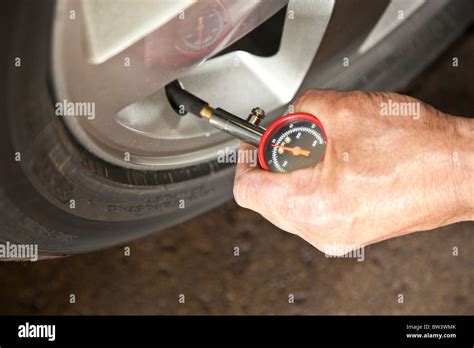
- Use a Reliable Gauge: Digital or dial gauges are generally more accurate than the stick-type gauges often found at gas stations.
- Check Monthly (and Before Long Trips): Make it a habit to check your tires at least once a month. Temperature fluctuations can also affect tire pressure – a drop of 10 degrees Fahrenheit can reduce tire pressure by about 1 PSI.
Common Misconceptions and Best Practices
One common misconception is that inflating tires beyond the recommended PSI will yield even better fuel economy. While slightly higher pressure might marginally reduce rolling resistance, it significantly compromises ride comfort, handling, and tire contact patch, increasing wear and safety risks. Always adhere to the manufacturer’s recommended pressure.
Another point of confusion is whether to inflate when the tires are warm. As mentioned, always check and inflate to the cold PSI. If you must add air when tires are warm, add 4-5 PSI above the recommended cold pressure and recheck them when they are cold to adjust as necessary.

Conclusion
The answer is a resounding yes: proper tire pressure truly saves gas and money. It’s one of the simplest, most effective, and cheapest forms of car maintenance you can perform. By investing a few minutes each month, you not only improve your vehicle’s fuel efficiency and extend the life of your tires, but you also significantly enhance your driving safety. So grab a tire gauge, make it a habit, and start reaping the benefits at the pump and on the road.