The Octane Enigma: Understanding Your Fuel
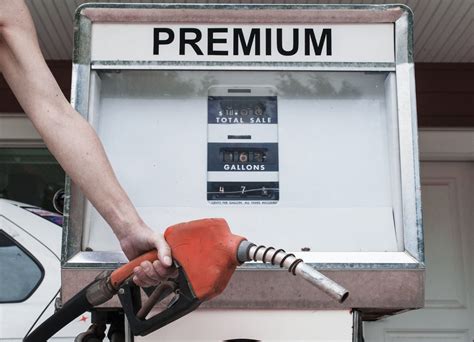
It’s a common question at the gas pump: should you spring for premium fuel, or is regular perfectly sufficient? Many drivers believe that premium gas, with its higher octane rating, offers a performance boost or better fuel economy, even in cars not explicitly requiring it. However, the reality is more nuanced and often depends on your vehicle’s specific engineering.
To understand whether premium gas benefits your car, we first need to clarify what octane ratings actually signify. Octane is a measure of a fuel’s resistance to pre-ignition or “knocking.” In an internal combustion engine, gasoline and air are compressed before being ignited by a spark plug. If the fuel ignites prematurely due to excessive heat and pressure – before the spark plug fires – it causes an uncontrolled combustion known as knocking or pinging. This can lead to decreased efficiency, reduced power, and, over time, significant engine damage.

Engine Design: The Ultimate Decider
The crucial factor in determining if your car needs premium fuel is how its engine was designed. High-performance engines, often found in sports cars, luxury vehicles, or those with forced induction (turbochargers or superchargers), typically operate at higher compression ratios or boost pressures. These conditions make them more susceptible to knocking, and thus, they are engineered to require higher-octane fuel to prevent pre-ignition. For these engines, using the recommended premium fuel is essential for optimal performance, efficiency, and longevity.
Conversely, most standard daily drivers, including many sedans, SUVs, and commuter cars, are designed with lower compression ratios and are perfectly content running on regular (87 octane) gasoline. Their engine control units (ECUs) are calibrated to expect and perform best with regular fuel. Using premium fuel in these vehicles offers no discernible benefit.

The MPG Myth: Separating Fact from Fiction
The idea that premium gas boosts MPG in any car is a persistent myth. For vehicles designed for regular fuel, using premium will not magically increase your miles per gallon. Here’s why:
- Octane isn’t energy: Higher octane doesn’t mean more energy per gallon. Regular and premium gasoline contain virtually the same amount of energy.
- Engine calibration: Your car’s ECU is programmed to extract the most efficiency and power from the fuel type it’s designed for. If it expects 87 octane, feeding it 91 or 93 octane won’t make it work harder or smarter.
- Knock sensors: Modern cars have knock sensors that detect pre-ignition. If a car designed for regular fuel is given premium, the sensors won’t detect any knocking and the ECU won’t alter ignition timing to take advantage of the higher octane, as there’s nothing to take advantage of. Conversely, if a premium-required car is given regular, the sensors will detect knocking, and the ECU will retard ignition timing to protect the engine, which can *decrease* both power and efficiency.

When Premium Might (Rarely) Help a Regular-Fueled Car
While generally unnecessary, there are very specific, rare scenarios where a regular-fueled car might see a tiny, imperceptible benefit from premium gas:
- Extreme heat and heavy load: In extremely hot climates, carrying heavy loads, or towing uphill, an engine might be pushed to its limits, causing it to run hotter. In such rare cases, a higher octane fuel could theoretically offer a minor margin of protection against knocking, though most modern cars handle this through ECU adjustments.
- Engine wear: An older engine with significant carbon buildup might experience an increased effective compression ratio, making it more prone to knocking. In such a specific circumstance, premium fuel might mitigate knocking, but the underlying issue of engine wear remains.
For the vast majority of daily driving situations, these edge cases are irrelevant.
The Verdict: Consult Your Owner’s Manual
The definitive answer to whether your car needs premium gas is always found in your vehicle’s owner’s manual. Manufacturers clearly specify the recommended fuel type. If your manual recommends “premium unleaded only” or “91 octane or higher,” then you should use premium fuel to ensure your engine performs as designed and to avoid potential damage. If it states “regular unleaded” or “87 octane,” then using premium is simply throwing money away.
For the average daily driver, sticking to the recommended regular fuel is the smartest financial and mechanical choice. The money saved by avoiding premium can be better spent on proper vehicle maintenance, which genuinely contributes to better fuel efficiency and prolongs your car’s life. Don’t fall for the myth; empower yourself with knowledge and fuel your car wisely.