Understanding Low-Cost ETFs for Beginners
Embarking on your investment journey can seem daunting, but it doesn’t have to be. For beginners looking to build long-term wealth, low-cost Exchange Traded Funds (ETFs) stand out as an incredibly effective and accessible option. ETFs are essentially baskets of various investments—like stocks, bonds, or commodities—that trade on stock exchanges, much like individual stocks. They offer instant diversification, often with very low management fees, making them ideal for those new to investing.
The beauty of low-cost ETFs lies in their simplicity and efficiency. Instead of picking individual stocks, which requires significant research and carries higher risk, an ETF allows you to invest in hundreds or thousands of companies simultaneously with a single purchase. This broad exposure helps mitigate risk and ensures your portfolio is well-diversified from day one.
Why Expense Ratios Matter for Long-Term Growth
One of the most critical factors when choosing an ETF, especially for long-term investing, is its expense ratio. This ratio represents the annual fee charged by the ETF provider to manage the fund, expressed as a percentage of your investment. While a difference of 0.5% or even 0.1% might seem negligible, these fees can significantly erode your returns over decades due to the power of compounding.
For instance, an ETF with a 0.5% expense ratio means that for every $10,000 invested, you pay $50 annually. An ETF with a 0.05% expense ratio, on the other hand, costs just $5 for the same investment. Over 30-40 years, the cumulative impact of lower fees can translate into tens or even hundreds of thousands of dollars more in your pocket. This is why focusing on truly low-cost options is paramount for long-term wealth accumulation.
Top Low-Cost ETF Categories for Beginners
For beginners, constructing a robust and diversified portfolio can often be simplified by focusing on a few key types of low-cost ETFs:
-
Broad Market Index ETFs (e.g., S&P 500, Total Stock Market)
These are often the cornerstone of a beginner’s portfolio. ETFs tracking indexes like the S&P 500 (e.g., SPY, IVV, VOO) give you exposure to 500 of the largest U.S. companies. Total stock market ETFs (e.g., VTI, ITOT) go even broader, including small and mid-cap U.S. companies. They offer excellent diversification within the U.S. equity market with extremely low expense ratios (often 0.03-0.07%).
-
International Equity ETFs
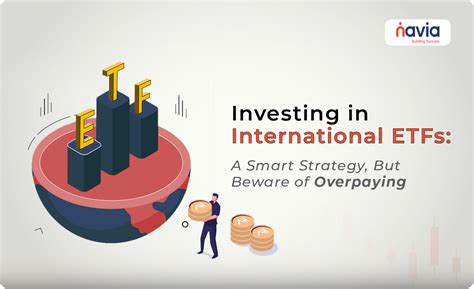
To further diversify and capture growth opportunities outside the U.S., international equity ETFs are essential. These can track broad international markets (e.g., VXUS, IXUS), developed markets (e.g., VEA, EFA), or emerging markets (e.g., VWO, IEMG). They provide exposure to global economies, reducing your reliance on a single country’s performance.
-
Bond ETFs
While often seen as less exciting than stocks, bond ETFs play a crucial role in providing stability and income to a portfolio, especially as you approach retirement. Low-cost bond ETFs (e.g., BND, AGG for total U.S. bond market) can help reduce overall portfolio volatility and offer a steady income stream. The allocation to bonds typically increases with age.

How to Select the Right ETFs
Beyond low expense ratios, consider these factors when selecting ETFs:
- Assets Under Management (AUM): Look for ETFs with a large AUM (hundreds of millions or billions) as they tend to be more liquid and less likely to be closed.
- Tracking Error: This measures how closely an ETF’s performance matches its underlying index. Lower tracking error indicates better management.
- Liquidity: Higher trading volume means it’s easier to buy and sell shares without significantly impacting the price.
- Provider Reputation: Stick to reputable providers like Vanguard, iShares (BlackRock), Schwab, and Fidelity, known for their low-cost index funds.
Building Your Long-Term ETF Portfolio
A simple yet highly effective strategy for beginners is the ‘three-fund portfolio.’ This typically involves a U.S. Total Stock Market ETF, an International Total Stock Market ETF, and a Total U.S. Bond Market ETF. For example:
- Vanguard Total Stock Market ETF (VTI)
- Vanguard Total International Stock ETF (VXUS)
- Vanguard Total Bond Market ETF (BND)
The allocation (e.g., 60% VTI, 20% VXUS, 20% BND) will depend on your age, risk tolerance, and investment horizon. Younger investors with a long time horizon might opt for a higher stock allocation, while those closer to retirement might choose more bonds for stability. The key is to set a target allocation and rebalance periodically (e.g., once a year) to maintain it.

The Power of Compounding and Consistency
Investing for long-term wealth isn’t about timing the market; it’s about time in the market. Two powerful principles will be your best allies:
- Compounding: This is the process where your investment gains generate their own earnings. The earlier you start, the more time your money has to grow exponentially.
- Dollar-Cost Averaging: By investing a fixed amount regularly (e.g., $100 every paycheck), you buy more shares when prices are low and fewer when prices are high. This strategy averages out your purchase cost over time and reduces the risk of investing a large sum at an unfortunate market peak.
Consistency is key. Automate your investments so that money is transferred from your bank account to your brokerage account and invested in your chosen ETFs regularly. This removes emotion from the investment process and ensures you stick to your plan.

Getting Started: Practical Steps
- Open a Brokerage Account: Choose a reputable brokerage firm known for low fees and a wide selection of ETFs (e.g., Fidelity, Schwab, Vanguard, E*TRADE, M1 Finance).
- Research ETFs: Use online screeners to find low-cost ETFs that align with broad market indexes and your chosen asset allocation.
- Fund Your Account: Set up recurring transfers from your bank account.
- Invest Consistently: Set up automated investments into your chosen ETFs.
- Monitor and Rebalance: Review your portfolio annually to ensure it still aligns with your target allocation and risk tolerance.
Invest Smart, Live Wealthy
Investing in low-cost ETFs is one of the most straightforward and effective strategies for beginners to build substantial long-term wealth. By focusing on broad market diversification, minimizing fees, and maintaining a disciplined approach, you can harness the power of the market to achieve your financial goals. Start early, invest consistently, and let the magic of compounding work its wonders. Your future self will thank you.