Understanding Octane: What Premium Fuel Really Is
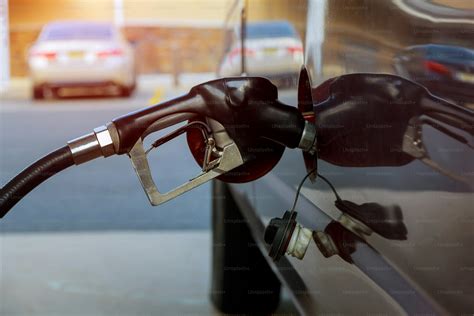
The quest for better car performance and fuel economy often leads drivers to consider premium gasoline. The perception is that ‘premium’ means better, cleaner, and more efficient. However, the primary difference between regular and premium fuel isn’t its ‘quality’ in the general sense, but its octane rating. Octane is a measure of a fuel’s resistance to pre-ignition or ‘knocking’ – a phenomenon where the fuel-air mixture ignites prematurely in the engine’s cylinders, leading to a loss of power and potential engine damage.
Most vehicles on the road are designed to run perfectly on regular unleaded gasoline, typically with an 87 octane rating. Premium fuels, ranging from 91 to 93 octane, are formulated to resist this pre-ignition under higher compression ratios or more advanced ignition timings found in specific engines.
Engine Design Dictates Fuel Needs
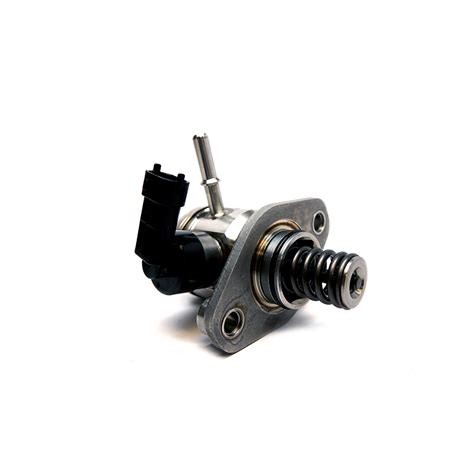
Modern car engines are highly sophisticated, equipped with knock sensors and advanced engine control units (ECUs) that can detect and adjust to different fuel octanes. If your car is designed for regular unleaded fuel, its engine’s compression ratio and ignition timing are optimized for 87 octane. Pouring higher octane fuel into such an engine will not provide a power boost, nor will it inherently improve fuel economy.
The ECU in a regular-fuel-designed car will simply not be able to take advantage of the higher octane. It won’t advance the timing or increase boost pressure because it’s not programmed to do so, effectively rendering the extra octane (and your extra expense) useless. The engine will perform exactly as it would with 87 octane.
When Premium Fuel Is Necessary (and Why)
There are specific scenarios where premium fuel is not just recommended, but required. High-performance vehicles, sports cars, and luxury vehicles often have high-compression engines, turbochargers, or superchargers. These engines run hotter and operate under greater pressure, making them susceptible to knocking if lower octane fuel is used.

For these vehicles, using the specified premium fuel is crucial for optimal performance, preventing engine damage, and maintaining warranty validity. In such cases, the manufacturer explicitly states ‘premium fuel required’ in the owner’s manual and on the fuel cap. Ignoring this recommendation can lead to the ECU retarding the ignition timing to prevent knocking, resulting in reduced horsepower, worse fuel economy, and long-term engine stress.
The Myth Debunked: MPG and Cost Savings
So, does premium fuel save you money by boosting MPG in a car designed for regular fuel? The short answer is almost universally no. Since your engine cannot utilize the higher octane, there will be no measurable increase in fuel efficiency or power output. Any perceived improvement is likely anecdotal or psychological.
Consider the price difference: premium fuel typically costs anywhere from $0.20 to $0.60 more per gallon than regular. If your car doesn’t require it, you’re simply throwing that extra money away with every fill-up. Over a year, this can amount to hundreds of dollars wasted, rather than saved. For instance, if you fill up 15 gallons a week and premium costs $0.30 more, you’re spending an extra $4.50 per week, totaling over $230 annually with no benefit.
Genuine Ways to Boost Your Car’s MPG
Instead of relying on premium fuel for a car that doesn’t need it, focus on proven strategies to improve your vehicle’s fuel economy:
- Regular Maintenance: Keep your engine tuned, replace air filters, spark plugs, and check fluid levels. A well-maintained engine runs more efficiently.
- Tire Pressure: Properly inflated tires reduce rolling resistance, which can significantly impact MPG. Check your tire pressure monthly.
- Driving Habits: Avoid aggressive acceleration and hard braking. Smooth, consistent driving is key. Using cruise control on highways can also help.
- Reduce Weight: Don’t carry unnecessary items in your trunk. Every extra pound reduces efficiency.
- Aerodynamics: Remove roof racks or cargo carriers when not in use, as they create drag.
- Plan Routes: Combine errands to minimize cold starts and short trips, which consume more fuel.

Conclusion: Stick to What Your Car Needs
Ultimately, the best advice for maximizing your car’s MPG and saving money at the pump is to adhere to your manufacturer’s recommendations. If your owner’s manual specifies regular unleaded gasoline, using premium fuel will not offer any performance or efficiency benefits and will only cost you more money. Reserve premium fuel for vehicles that genuinely require it. By focusing on smart driving habits and regular vehicle maintenance, you’ll achieve far more significant and genuine savings than by opting for higher-octane fuel your car simply doesn’t need.