
Why Lower Back Pain is a Lifter’s Nemesis
For men who embrace the challenge of lifting heavy weights, the pursuit of strength and muscle mass often comes with a looming threat: lower back pain. This common complaint can derail progress, sideline training, and significantly impact daily life. While lifting heavy is inherently demanding on the spine, proper technique and mindful execution can drastically reduce the risk of injury. Understanding and implementing the best form tips is not just about avoiding pain; it’s about building a sustainable and healthy lifting career.

Mastering Core Engagement: Your Body’s Natural Brace
The foundation of a safe lift, especially with heavy weights, lies in a strong and properly engaged core. Your core acts as a natural weightlifting belt, stabilizing your spine and transferring force efficiently between your upper and lower body.
Bracing vs. Sucking In
- Bracing: Think about preparing for a punch to the stomach. Take a deep breath into your diaphragm, then forcefully contract your abdominal muscles as if you’re trying to push them outwards against your belt. This creates intra-abdominal pressure, a crucial protective mechanism for your spine.
- Sucking In: This only tightens your superficial abdominal muscles and does not provide the deep spinal stability needed for heavy lifts.
Practice bracing before every rep of major compound movements like squats, deadlifts, and overhead presses. It should feel like you’re creating a solid, unyielding cylinder around your midsection.
The Cornerstone Lifts: Squats and Deadlifts
These two exercises are often the biggest culprits for lower back pain if performed incorrectly, but they are also essential for building overall strength. Perfecting their form is paramount.
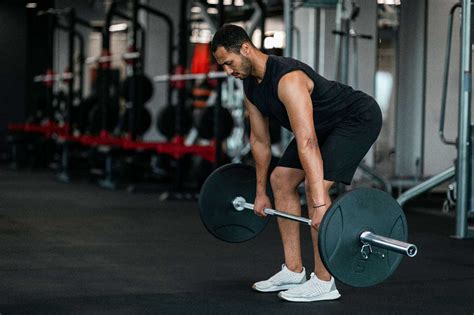
Deadlift Form Essentials:
- Set-up: Position your feet hip-width apart, shins close to the bar. Hinge at your hips, keeping a neutral spine, and grasp the bar with an overhand or mixed grip just outside your shins.
- Initial Pull: Engage your lats and brace your core. Drive through your heels, lifting the bar by extending your hips and knees simultaneously. Keep the bar close to your body throughout the lift. Your hips and shoulders should rise at the same rate.
- Lockout: Stand tall, squeezing your glutes at the top. Do not hyperextend your lower back.
- Lowering: Reverse the motion by hinging at your hips first, then bending your knees once the bar passes them. Control the descent.
Squat Form Essentials:
- Set-up: Bar on your upper traps or rear deltoids, not directly on your neck. Feet slightly wider than hip-width, toes pointed slightly out. Brace your core.
- Descent: Initiate by pushing your hips back and down simultaneously, as if sitting into a chair. Keep your chest up and back straight (neutral spine). Knees should track over your toes.
- Depth: Aim for thighs parallel to the floor or deeper if mobility allows, without rounding your lower back.
- Ascent: Drive through your heels, extending hips and knees to return to the starting position. Maintain core tension.

Beyond the Big Lifts: General Principles for All Exercises
- Neutral Spine: Maintain a natural curve in your lower back – neither excessively arched nor rounded – throughout all movements. This is fundamental for spinal health.
- Control the Weight: Never use momentum or jerk the weight. Control both the concentric (lifting) and eccentric (lowering) phases of every exercise.
- Warm-up Adequately: A proper warm-up increases blood flow to muscles and joints, preparing your body for the stress of heavy lifting. Include dynamic stretches and light sets of the exercise you’re about to perform.
- Listen to Your Body: Pain is a warning sign. If a movement causes sharp or persistent lower back pain, stop immediately. Don’t push through pain.
- Progressive Overload, Smartly: Increase weight gradually. Form should always take precedence over the amount of weight lifted. Ego lifting is a fast track to injury.

Accessory Work and Recovery: Supporting Your Spine
While perfecting compound lift form is crucial, don’t neglect exercises that strengthen the muscles supporting your spine and those that promote recovery.
- Strengthen Your Glutes: Strong glutes are essential for hip extension and stability, taking pressure off the lower back. Incorporate glute bridges, hip thrusts, and reverse hyperextensions.
- Hamstring Flexibility: Tight hamstrings can pull on the pelvis, contributing to lower back issues. Include hamstring stretches in your routine.
- Thoracic Mobility: A stiff upper back can force the lower back to compensate. Incorporate exercises to improve thoracic extension and rotation.
- Rest and Recovery: Allow adequate rest between training sessions for your muscles and connective tissues to repair and grow stronger. Prioritize sleep.
- Nutrition and Hydration: Support your body’s repair processes with proper nutrition and stay well-hydrated, as spinal discs rely on hydration.

Conclusion: Prioritize Form, Protect Your Back
Lifting heavy weights offers immense benefits, but it also carries inherent risks, particularly to the lower back. By consistently applying these form tips – prioritizing core engagement, mastering fundamental movement patterns, controlling the weight, and listening to your body – you can significantly reduce your risk of lower back pain. Remember, a strong back is a healthy back, and a healthy back allows you to continue challenging yourself and making progress for years to come. Invest in your form now, and your future self will thank you.